
20 things you (probably) didn't know about BHX
Happy Birthday!
If we were Birmingham Airport, we'd go the Queen's route and have two birthdays. Reason being, it first opened in 1939 but was quickly requisitioned by the Air Ministry to help our boys politely inform Hermann Göring he's 600 miles from home. So it didn't really get started, commercially, until after WW2. But we're not Birmingham Airport and Birmingham Airport isn't the Queen, so to make things easier they're just celebrating 80 years in Brum, this year. And we've been into the archives...


In 1928, Birmingham City Council decided that the city needed an airport. Well duhrr! These plans were delayed — a niggling little matter known as The Great Depression got in the way — but in 1933 the location was finally settled upon. Sites at Shirley and Aldridge were considered but declined.
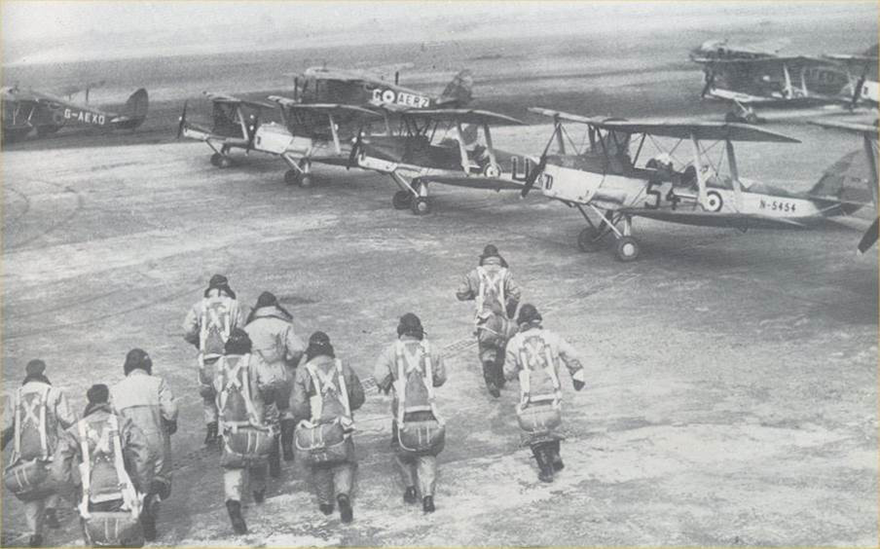
BHX opened – under the name of Elmdon Airport – on July 8 1939. Yes, it's actually in Solihull, not Birmingham. Initial flights took passengers to Glasgow, Liverpool and sunny Croydon. You see, Croydon Airport was the UK's only international airport during the interwar period. It's rather fascinating actually.
|

Originally opened by the Duchess of Kent (and joined by PM, Neville Chamberlain), the iconic Elmdon Terminal and Control Tower building has now been given Grade II protected status by Historic England. You'll see it before take off and landing as it's right by the airport, if you take a look around.
Two men steered the design; one of whom was named Valery Dawbarn — he asked people to call him Nigel. Dawbarn's most famous work was BBC Television Centre, built between 1953 and 1960. This picture perfectly illustrates the over-hanging canopies which resembled aeroplane wings. The entire expenditure on the project was around £360,000.
Known as The Elmdon or the Art Deco terminal, it was last used en masse in 1984, but got called into action for private flights until closure last year. There's some great internal shots here, including the sort of cocktail bar we want to frequent, pre-flight.

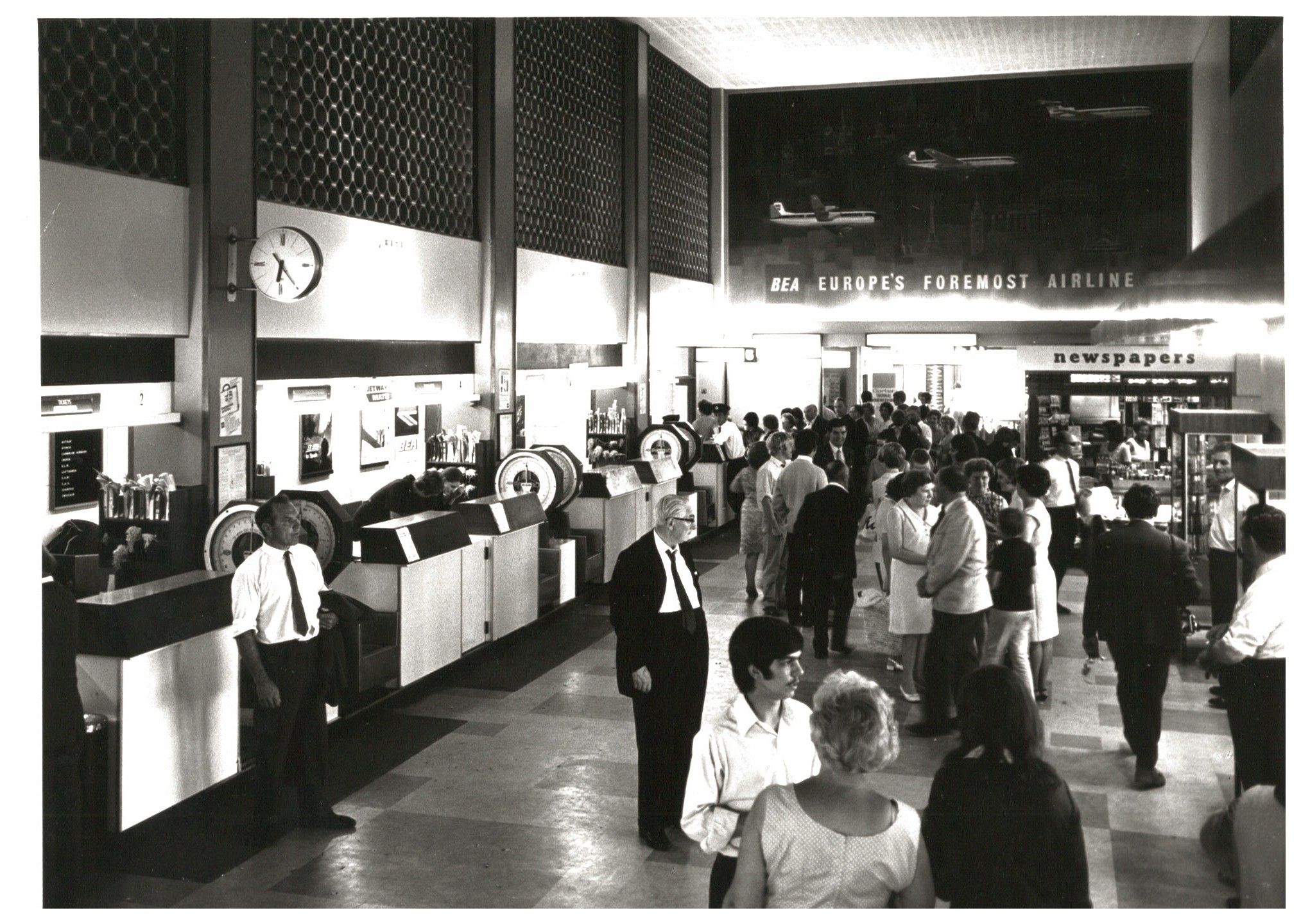
In 1961 a new terminal building, called The International Building, was added to Birmingham Airport. The main runway was extended in 1967, and a new service to New York was launched. The airport came to its current form in 1984, when that terminal was replaced.
In 1991 a second terminal opened, the first in the world to cater for both domestic and international passengers by solving the complications of Customs and Immigration control, which previously demanded distinct terminals. Don't ask us how.
The Art Deco Holiday Inn Birmingham Airport on the Coventry Road (this one) was originally built as the RAF Head Quarters, before becoming the Excelsior Hotel. Ben, an African Grey parrot, lived in a cage on the counter in the Castaway’s bar.

Opening on 16 August 1984 the Maglev people-mover was a global innovation — the first public transport installation (in the present era) to use magnetic levitation. This absolute witchcraft was also the best bit of the holiday for countless kids.
Linking Birmingham International Railway Station with BHX and the NEC it used two 'cabin' sized vehicles which featured electromagnets at each corner (to provide the lift) and linear induction motors (for propulsion). Everybody got that?
Important: It was not a monorail as it used several rails. So, to be honest, it was the opposite of a monorail.
The trains "flew" at an "altitude" of 15mm, carried up to 40 passengers and with a maximum speed of 26mph the 620 metre journey lasted for 90 seconds. This video is a joy to watch.
Maglev technology didn't catch on and in the end it became a victim of its own success. Sort of. It had been so dependable, for so long, that when it finally needed spare parts there was no replacement parts industry to help it. Its electronics had by then become several generations behind the times and closure came in June 1995.
It was replaced with an Austrian cable hauled system which we use today and is more akin to a flat funicular railway. Its two trains each consist of two carriages and can carry up to 1600 people per hour between the rail station and passenger terminals. We once filmed the journey, so you don't even need to go on holiday to ride the train! You're so welcome.
The airport's radar unit doesn't technically even need radars. There could be a power cut, the team's computers could spontaneously shut down and all the backup generators stop working, and they'd still be able to get you back to BHX. Using triple-charged, battery-operated radios, they'd just get the aircraft to fly to holding points at different levels, and then fly set procedures to land on the runway.
These days the airport handles almost 13 million passengers a year and flies to 150 destinations direct. When HS2 opens, the rail journey between Birmingham Airport and central London will reduce from 70 mins to 38 mins, which is exactly the average length of a single podcast, oddly.
'I Choose Birmingham' is a free weekly email about the best things to do in Brum. Subscribe below.
