
Second to None
Carlos Acosta is thinking big
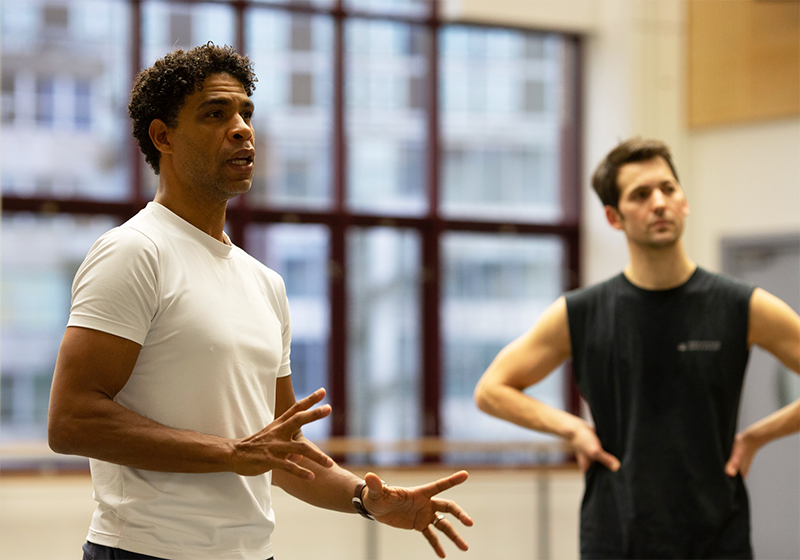
He's danced with the most prestigious ballet companies in the world. He was the first black dancer to be given the role of Romeo. There's a film about his life — he starred in it. He's written two books. He's a CBE. And he's even found the time to create his own dance company, in Havana, his hometown. Carlos Acosta is many things, including, now, the director of Birmingham Royal Ballet. And don't think his ambition for the city ends there. We sat down with one of Cuba's greatest exports, and when we say sat, it's difficult to think of a moment when the humble, hulking ball of energy — who still attends morning class at BRB — stopped moving.
How's your foot? You were on crutches last time we saw you.
Oh, that hurt. I did a jump demonstrating a move in rehearsals and ‘KRRRR’ — I tore my fascia. Now? It’s alright. But I was worried about missing some performances. I have to dance in Rooster this month. It's hard and fast and cardio. But it's going to be okay. Painful maybe, but okay.
So you're still juggling old commitments as well as your new job?
Oh yeah. It's crazy right now — I dance, I come back, then I dance some more. I'm at a crossroads in my life while I complete projects I took on before coming to Birmingham and I'm looking forward to being more settled. But I'm young enough to do this and I've got so many ideas.
Your eyes just lit up. What sort of ideas? What's job one?
Job one? Don't ask me to give you one! Okay, okay, the most important thing right now is to have a sense of a new beginning in people's minds. That something is happening at BRB and it's exciting and it’s different and it’s new. What do I mean by that? I mean lots of things but to start, I'm extending and revitalising the repertoire so we can be seen as a company that, as well as doing the traditional, is reaching out with surprising, exciting new titles and more representative choreography, particularly for the younger community. That’s why I’m starting with Don Q.
Don Quixote, right? Isn't that an old ballet?
It's the coolest classical ballet there is — it's Spanish, it has matadors, flamenco and big, colourful dancing. It’s very funny and all about escapism. The most beautiful escapism. It's a great production for first-timers and a ballet that every company commanding respect on the world stage should have. Birmingham Royal Ballet's run in June will be the first time my production has been performed outside London in the UK, and I am so excited for it.
You mention the world stage, how does BRB rank globally?
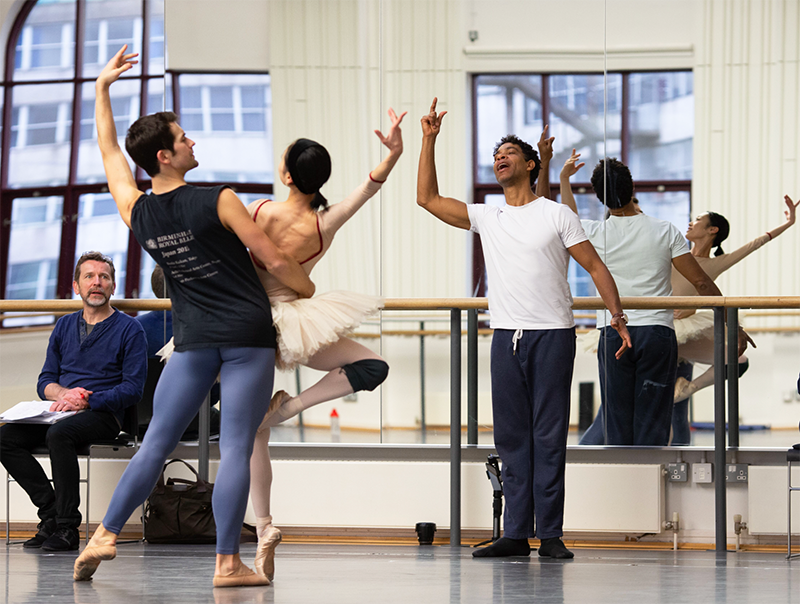
It’s at a great level, but globally, we have a way to go. My challenge is to give the dancers the opportunity to grow, which I'll do by bringing guest teachers from the premier companies — Paris Opera, The Bolshoi, The Royal Ballet. And we'll bring top individuals in too — Alessandra Ferri, Darcey Bussell. You don't learn to dance through reading or through YouTube. No. It's a skill that is passed on one-to-one, hand-to-hand with nurturing and detail and the passing on of confidence.
You talk about confidence a lot, do you think Birmingham Royal Ballet could do with more of it?
It’s all part of the plan. I think we should start being more gutsy, and saying: I’m worth it, I’m going to be a worldwide star. And I’m going to put the spotlight on the dancers, by bringing them to perform at the Royal Opera House for the first time in twenty years. And by getting them to guest with the best companies around the world, so they can see where they are in the contest internationally.
And by doing that, you raise the profile of the city?
To Birmingham, I make my greatest pledge. This is a city full of the most amazing treasures. But it has been ghettoised with everybody working individually on little things, so the world doesn't know about it yet. My aspiration is that the community comes together to emerge as the cultural powerhouse it deserves to be. Manchester’s done it. And Edinburgh has the most incredible festival. But what about us? We are the second-largest city in the UK and we should be second to none in the arts area. So it’s no longer about how great BRB or The Rep is — when the people of New York and Beijing and Buenos Aires look at us, they should know that there is a city called Birmingham, where the greatest artists in the world want to go. As a company, we're going to be ready. Ready with festivals, site-specific performances and engagement in the community. But I need people to come and see and pay attention and endorse what we are doing. Because worldwide, there’s nothing sadder than an empty seat.
It's well documented that you at times hated dance as a child [Acosta was expelled from ballet school for truancy]. What would you say to people who don't think ballet is for them?
That I was very, very wrong. And ballet became my life. I’m here because of ballet. I’m speaking English because of ballet. Ballet is the best thing that could ever have happened to me: it taught me tolerance and compassion and how to relate to people, because it’s a very collective art where 60 dancers are there every single day living and creating a work. Plus the crew. Plus the wardrobe. Plus the technical side. And, a bit like a city, if one of those factors fail, then the whole proposition fails. And when it works, the audience is on their feet, crying, and it’s a wonderful thing.
Already, you seem proud of what the company is doing. What's the proudest moment in your life?
I don’t think about my achievements that much — I’m concentrating on tomorrow and the next day and what else can I achieve with my life while I’m young and have strength. But every now and again, I’m there with a glass of rum and a Cuban cigar, and I say, yeah — growing up as the 11th child in a poor family with no prospects — what I have achieved is wonderful. Winning the Prix De Lausanne aged 16 changed my life forever. It also kept me from my family [unable to leave Cuba, to visit Carlos, under Castro's regime]. But eventually, I managed to bring them all to London to see me perform — that made me so happy. And when I had the means to buy my Dad some cowboy boots from Texas! He wore them all around Cuba in sweltering heat with jacket and tie, so proud and so completely full of sweat. That put a smile on my face. And obviously the CBE… I cried. I cry a lot. But I cry because my family was not able to witness these moments. Anyway, there are more moments to come.
And finally, how will you know when your job here is done?
There are many ways to measure success. Audience size and a more representative demographic. International acclaim. A distinct and representative artistic proposition for Birmingham. A happy company, working in a healthy environment, knowing that together each member can become a better version of themselves. There are so many things! But this isn't about me — I’m obviously not going to be around forever. And if in the time I have, I can bring something new to what is already an incredible foundation and an incredible city, I will be happy. Then somebody else will come in, and will bring something different. That’s how you build a story.
Don Quixote is at the Hippodrome from June 19 to 27. Tickets (from £20)
PICTURES: Ty Singleton — Carlos Acosta in the Studio at Birmingham Royal Ballet
'I Choose Birmingham' is a free weekly email about the best things to do in Brum. Subscribe below.
